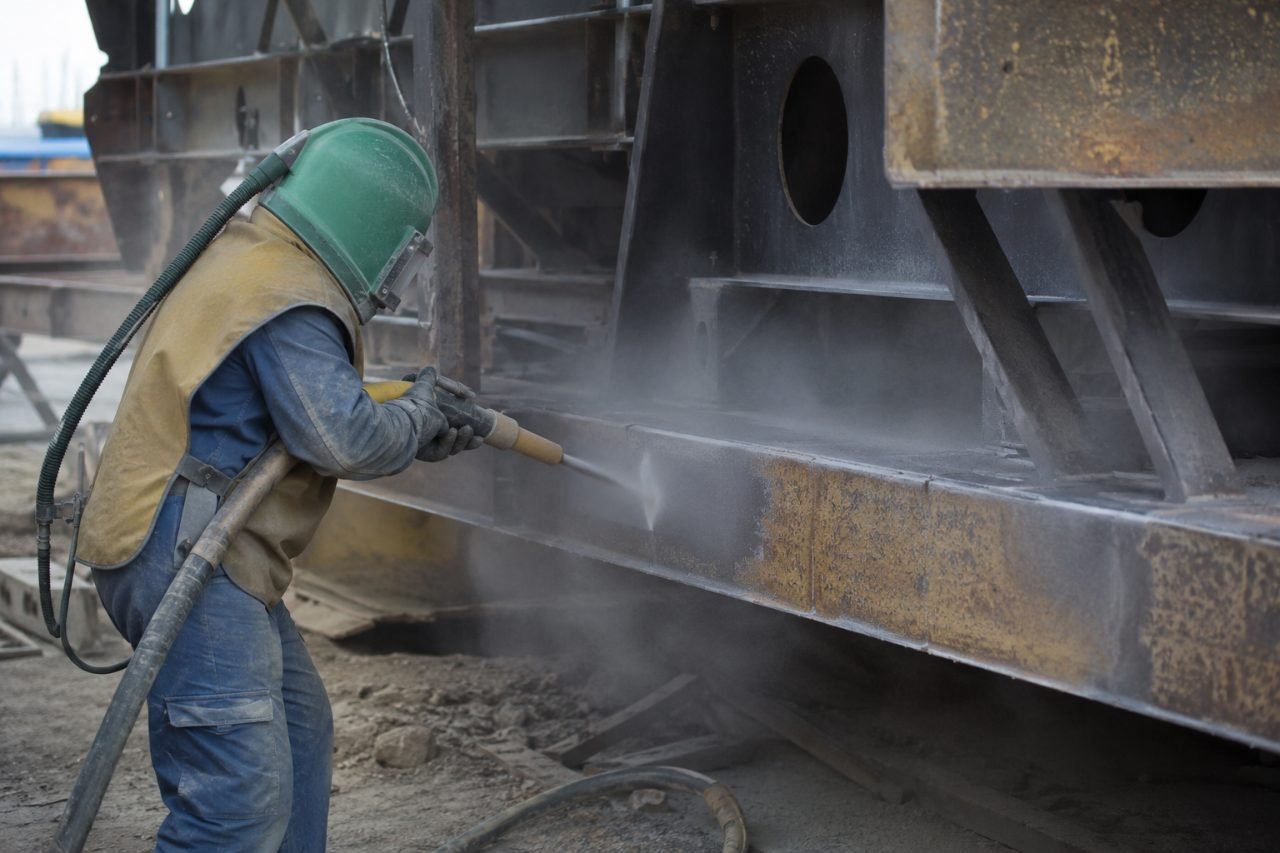
What is abrasive blasting?
Abrasive media is propelled at the surface under high pressure to cut away everything that should not be there — rust, mill scale, old paint, corrosion products and surface contamination. It is often called sandblasting, though modern industrial work uses engineered media such as garnet rather than sand.
The second half of the job matters as much as the first. Blasting leaves an anchor profile — a controlled roughness — that a protective coating keys into. Get that wrong and even a good coating system lifts early.
Media, pressure and technique are matched to the substrate and to the coating specified for the asset. On thin or sensitive material we will say so and recommend a gentler approach.
Cleaning, not stripping? If the goal is to remove grease, carbon or residue while leaving the existing surface intact, dry ice blasting is usually the better method.
What we blast
Typical industrial blasting and surface preparation work.
Rust removal
Surface rust through to heavier corrosion on steelwork, frames and equipment.
Paint & coating removal
Failed, blistered or flaking coatings stripped back before recoating.
Structural steel
Beams, columns, walkways, handrails and platforms prepared for coating.
Fabricated components
New fabrication de-scaled and profiled before the coating system goes on.
Chassis & heavy equipment
Trailers, frames, buckets, attachments and plant taken back to sound steel.
Tanks & vessels
External surfaces prepared for protective coating as part of planned maintenance.
Garnet blasting
Clean-cutting media that produces a consistent profile on steel with low dust compared to sand.
Surface preparation
Profiling and cleaning to the standard the specified coating system requires.
Industrial restoration
Older assets brought back to a serviceable, protectable condition.
Why preparation is the job
Coating failures are almost always preparation failures.
Better coating adhesion
A correct anchor profile gives the coating something to key into, which is what determines how long it lasts.
Corrosion removed, not covered
Rust painted over keeps working underneath. Blasting removes it so the repair is real.
Defects become visible
Cracks, pitting and weld defects show up on clean steel — before they are sealed under new paint.
Media matched to substrate
Aggressive where the steel can take it, gentler where it cannot — decided at assessment, not on the day.
Blast and coat in one scope
One contractor from bare steel to finished coating means no argument about what the surface was like underneath.
On site or off site
Fixed structures blasted in place with containment; components handled away from your operation.
Who we blast for
Sectors across Melbourne and regional Victoria.
Blasting is usually step one. See commercial painting & protective coatings for the coating systems we apply over prepared steel, or the problems we solve if you are not sure which method fits.
How a blasting job runs
Inspection
Substrate condition, coating history and the standard of finish required are assessed.
Media & method
Abrasive, pressure and technique selected for the steel and the coating that follows.
Containment
Masking, sheeting and dust control set up to protect adjacent plant and site activity.
Blasting
Surface taken back to the agreed condition, with progress checked as we work.
Coat or protect
Prepared steel coated promptly — or protected — before flash rusting can start.
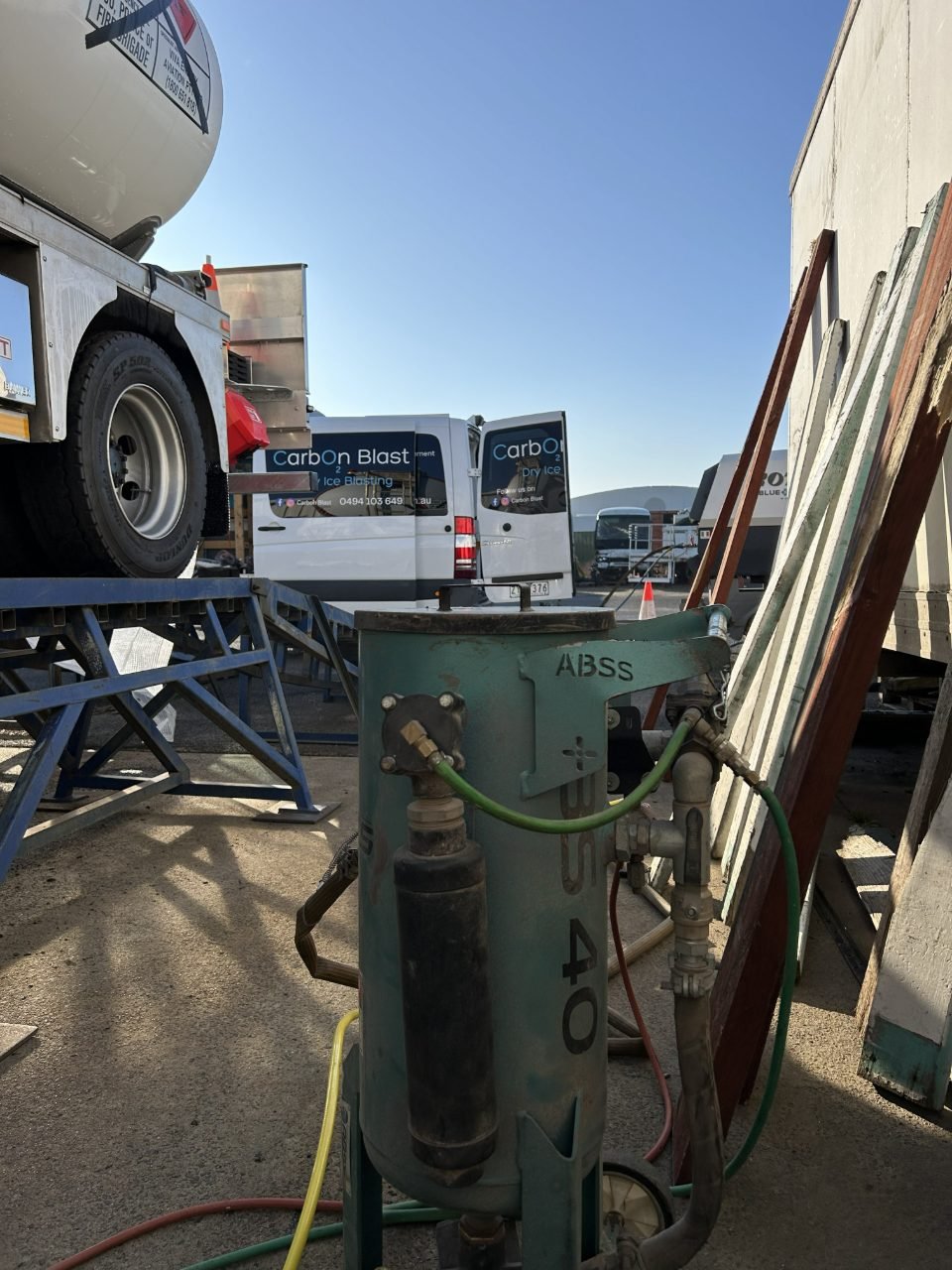
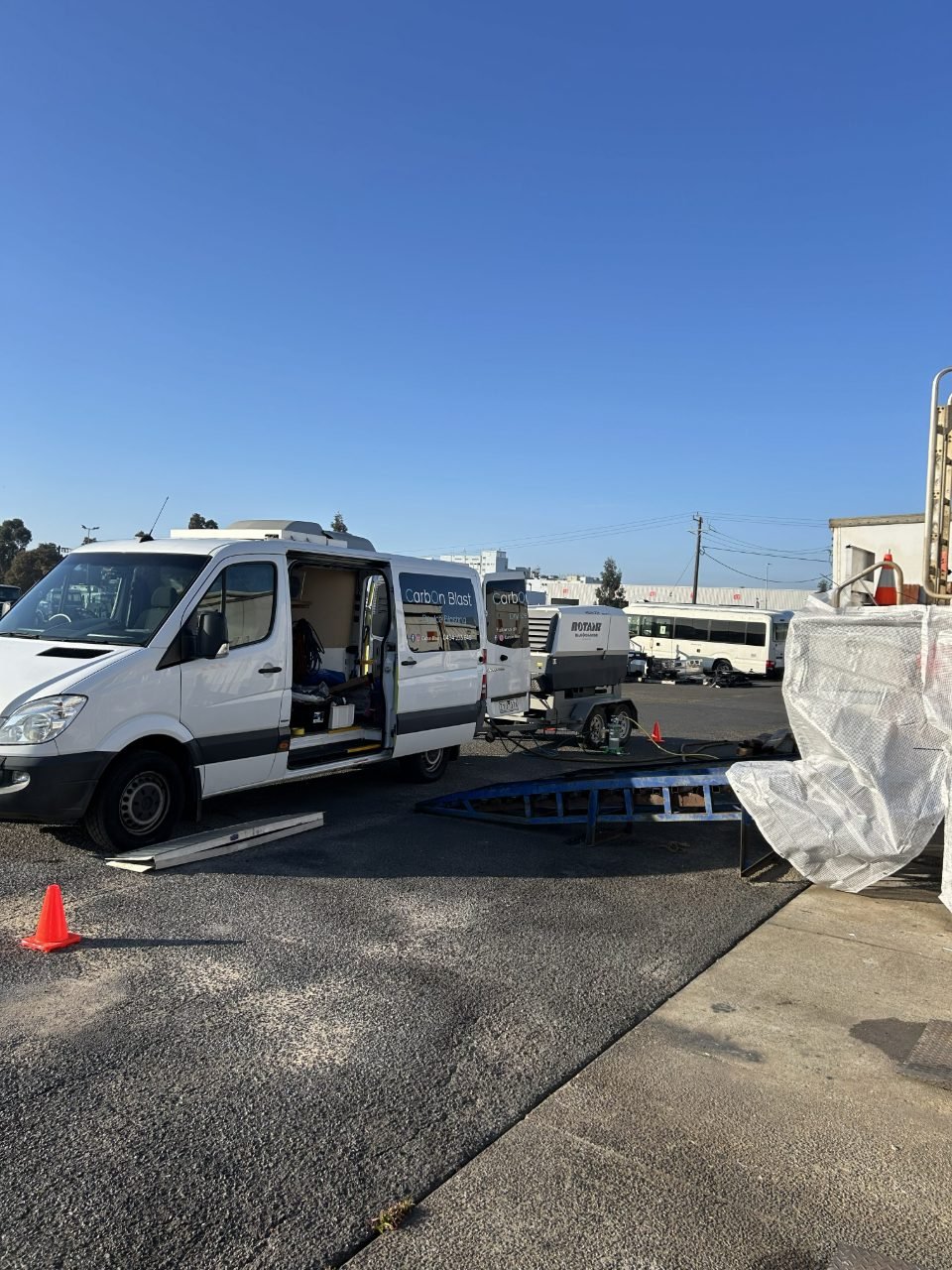
We bring the plant to your site
Compressor, blast pot, media and containment arrive together, so steelwork and plant that cannot be moved get prepared where they stand.
Access, containment and media recovery are agreed with your site before we mobilise. Where an asset is easier to handle off site, we will say so and quote it that way instead.
Abrasive blasting questions
Does abrasive blasting remove rust?
Yes — it is the standard method for removing rust, mill scale and failed coatings from steel, and for creating the surface profile a protective coating needs.
What abrasive media do you use?
Media is chosen for the substrate and the finish required. Garnet is common on steel because it cuts cleanly and gives a consistent profile with less dust than sand. Softer media are used where the substrate must not be eroded.
Is it the same as sandblasting?
It is the same idea — people still call it sandblasting — but industrial work now uses engineered abrasives rather than beach or river sand, for both finish quality and health reasons.
Can you blast on our site?
Yes, with containment and dust control suited to the location and the surrounding plant. Where site conditions make that impractical, smaller items can be handled off site instead.
How soon does blasted steel need to be coated?
As soon as practical — bare steel starts to flash rust once it meets moisture. That is why we prefer to hold the blasting and the coating in the same scope and schedule them back to back.
Will blasting damage thin or delicate material?
It can if the media and pressure are wrong, which is why the assessment happens first. On thin panels or sensitive surfaces we either soften the method or recommend dry ice blasting instead.
Do you service regional Victoria?
Yes — all of Victoria, including Geelong, Ballarat, Bendigo, Shepparton, Wodonga and Gippsland, planned as a single mobilisation.